
Whether you call them vaulted, cathedral, or shed ceilings, angled rooflines are a stunning architectural feature that adds volume and personality to a home. However, they notoriously make it difficult to light a room. When you install a standard recessed light on a slope, the beam follows the ceiling angle instead of pointing straight down. The right lighting helps sloped ceilings enhance your space instead of working against it.
The Limitations of Standard Fixtures on a Vaulted Ceiling:
-
-
The Spotlight Effect: Light shoots across the room, hitting the opposite wall or shining directly into your eyes, creating uncomfortable glare.
-
Hot Spots: Bright patches form on the ceiling while the space below is left in shadow.
-
Inefficient Illumination: Much of the light is trapped inside the fixture, reducing overall brightness.
-
To solve this, you need fixtures designed to correct the angle, ensuring the light travels vertically toward the floor where it’s needed most. Effective sloped ceiling lighting utilizes a fixed angle to correct the light’s path, directing it vertically toward the floor.
Determining Your Ceiling Pitch
Before choosing a fixture, you need to know the steepness of your ceiling, known as the "pitch,” Professionals use a ratio (like 4/12), which represents how many inches the ceiling rises for every 12 inches it runs horizontally. Understanding this measurement is the first step in selecting the correct sloped ceiling light for your project.
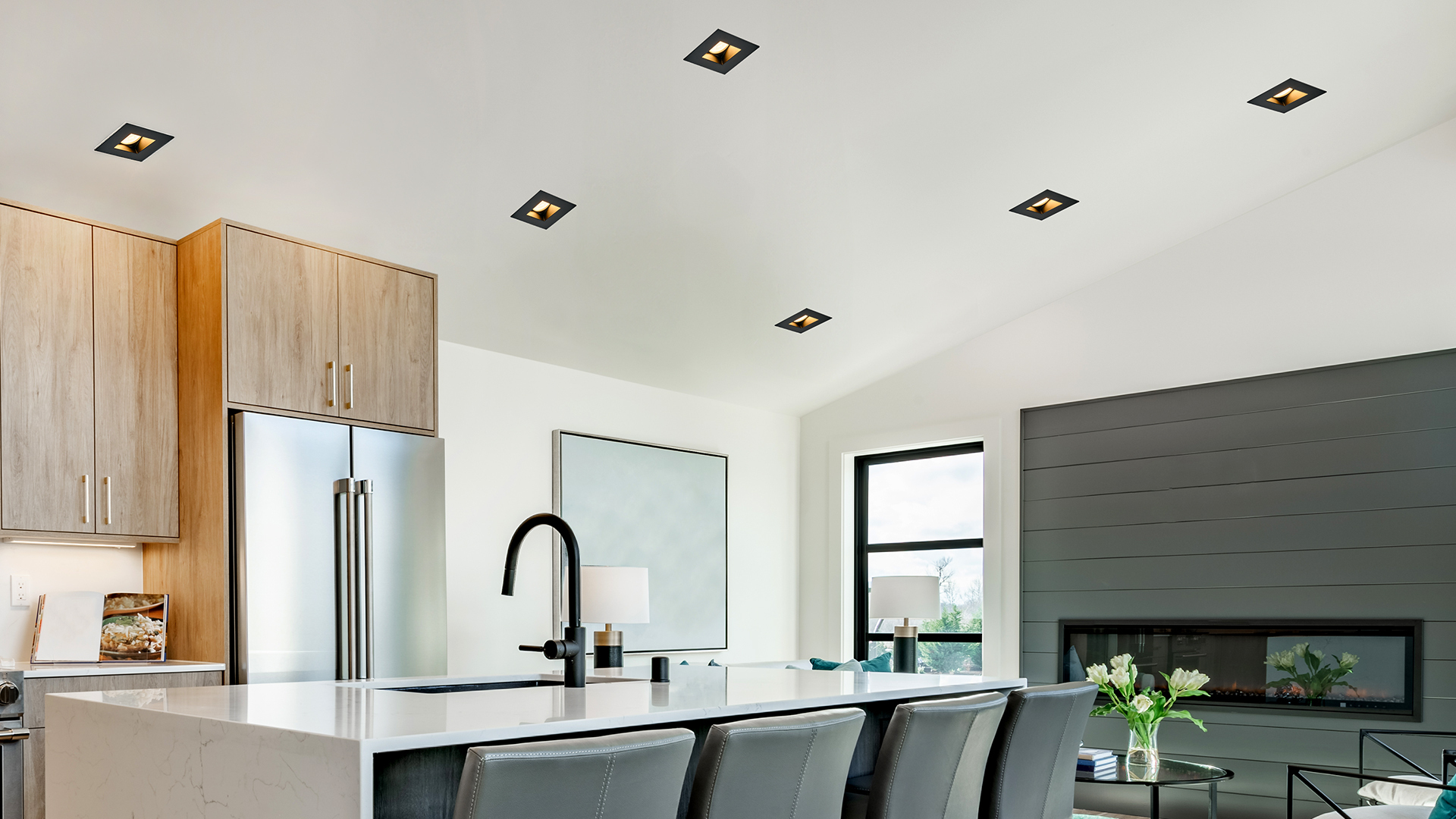
Sloped Downlights
Maxxima’s Sloped Downlights are designed for vaulted and cathedral ceilings. Unlike a standard flat fixture that would aim light at an awkward angle when installed on a pitched ceiling, these sloped ceiling recessed lights feature an internal 20° angled trim designed for a 4/12 to 5/12 ceiling pitch. This specialized engineering allows the fixture to sit perfectly flush against the angled ceiling while the light itself points vertically toward the floor. By correcting the angle, you ensure that the light isn't wasted by splashing against the high side of the ceiling or creating hot spots on your walls.
To improve visual comfort, these fixtures utilize deep regressed optics and a smooth inner baffle. Because sloped ceilings are often angled toward your line of sight, a standard light would be blindingly bright. By recessing the light source deeper into the housing, the primary brightness of the LED is shielded from your direct line of sight as you move through the room. This results in a clean ceiling aesthetic where the light is focused on the floor and furniture, while the source itself remains glare-free. This combination of directional lighting and an anti-glare design is what makes these the ideal choice for high end residential and professional sloped ceiling lighting installations.
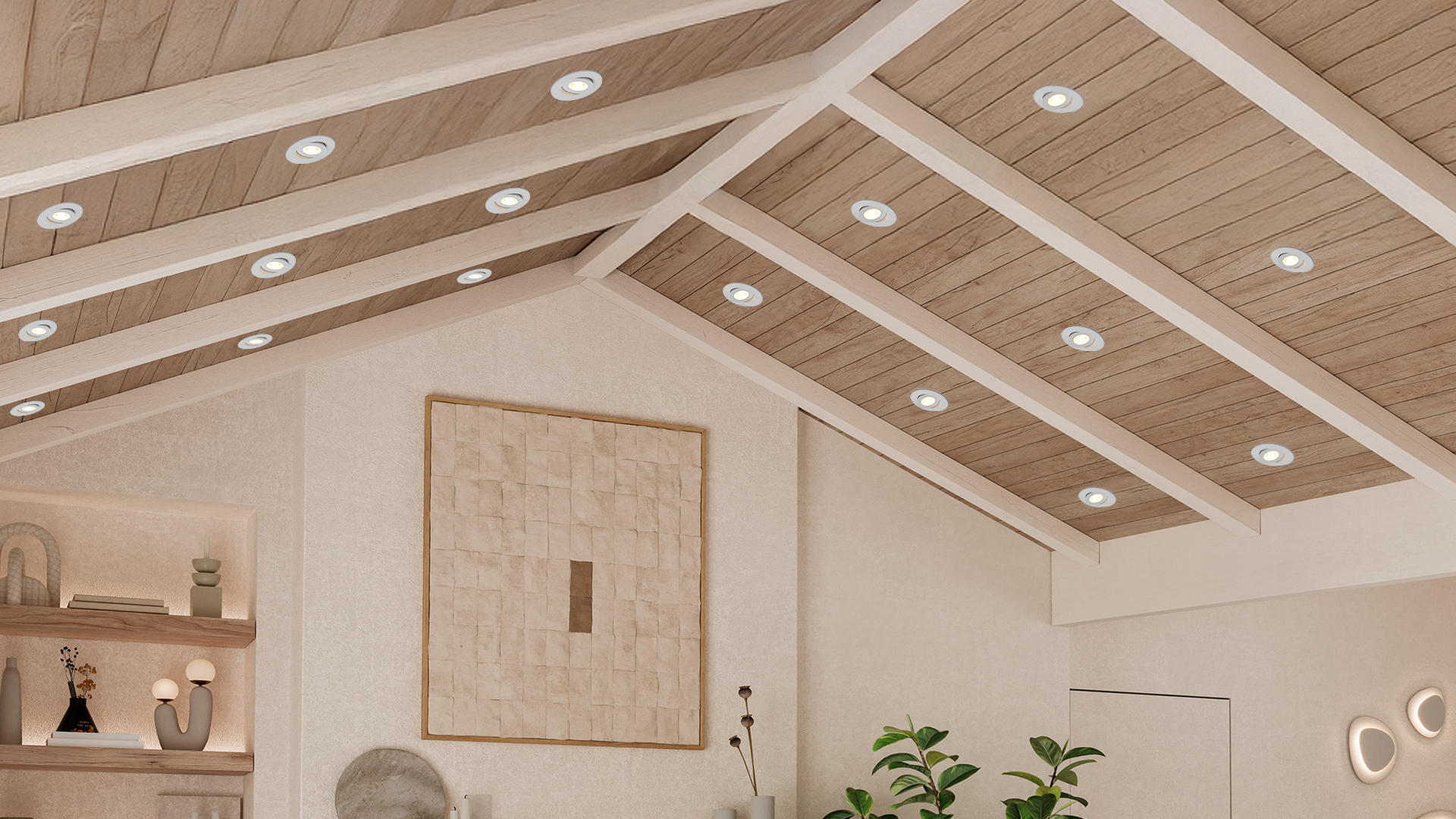
Why Choose Floating Gimbals?
While sloped ceiling recessed lights are excellent for moderate pitches, floating gimbals offer a level of flexibility that is essential for more extreme ceiling angles. The primary advantage of a floating design is its massive range of motion, providing up to a 90° tilt combined with a full 360° rotation. This allows you to point the light beam exactly where it's needed, even on extremely steep cathedral ceilings where a standard fixture simply couldn't reach the floor vertically. Unlike regular downlights, where the trim may block part of the beam on a sloped ceiling, the floating gimbal's trim sits flush against the slope while the light head pivots independently.
Finding the Perfect Angle for Your Home
Sloped ceiling lighting doesn’t have to be a compromise. By choosing between the seamless look of a Sloped Downlight and the high angle precision of a Floating Gimbal, you can highlight your home’s architecture without sacrificing comfort or visibility.
Ready to transform your vaulted space? Explore Maxxima’s full collection of sloped ceiling recessed lights today.