If you’ve ever looked at the packaging or product listing for an LED light, you’ve probably seen terms like IC Rated, UL Listed, ETL Listed, or Title 20 or 24. These LED lighting certifications, ratings, and compliance markings can be easy to overlook, especially if you’re not sure what they actually mean or why they matter. These ratings and certifications help communicate how a fixture has been tested, where it can be installed, and whether it meets specific safety, efficiency, or regulatory requirements. This can be especially important when certain certifications or ratings are required for your project.
Maxxima offers a wide range of LED lighting products with different certifications, ratings, and compliance markings to meet a variety of application and project requirements. In this article, we’ll break down the certifications, ratings, and compliance markings you may encounter when shopping for LED lighting.
The Role of ETL Listing in LED Safety
ETL Listed means a product has been independently tested and certified by Intertek to applicable safety standards for its intended use. Intertek is an Nationally OSHA-recognized Testing Laboratory (NRTL), and products carrying the ETL Listed mark have been evaluated for relevant safety requirements before being certified. For LED lighting, the specific testing requirements depend on the type of fixture and its intended application, but can address areas such as electrical construction, heat, wiring, and other potential safety hazards.
For Maxxima ETL Listed lighting, the certification confirms that the fixture has undergone independent third-party testing to applicable safety standards for its intended use. This can provide added confidence when selecting lighting for residential or commercial projects.
Understanding UL Listed Lighting
UL Listed means a complete product has been independently evaluated by UL Solutions and found to meet applicable safety standards for its intended use. For LED lighting, this testing can address areas such as electrical safety, heat and fire risk, construction, materials, and how the fixture performs under normal and abnormal operating conditions.
When choosing UL Listed LED fixtures, seeing the UL Listed mark on an LED light tells you the finished fixture, not just an individual component inside it, has been evaluated against applicable safety requirements. This can be especially important for residential and commercial projects where inspectors, contractors, building codes, or project specifications call for products certified by a recognized testing laboratory.
A UL Listing should always be considered alongside the fixture's intended application and other ratings. For example, a UL Listed light is not automatically approved for every environment or installation method; its product markings and specifications will indicate the conditions for which it was evaluated.
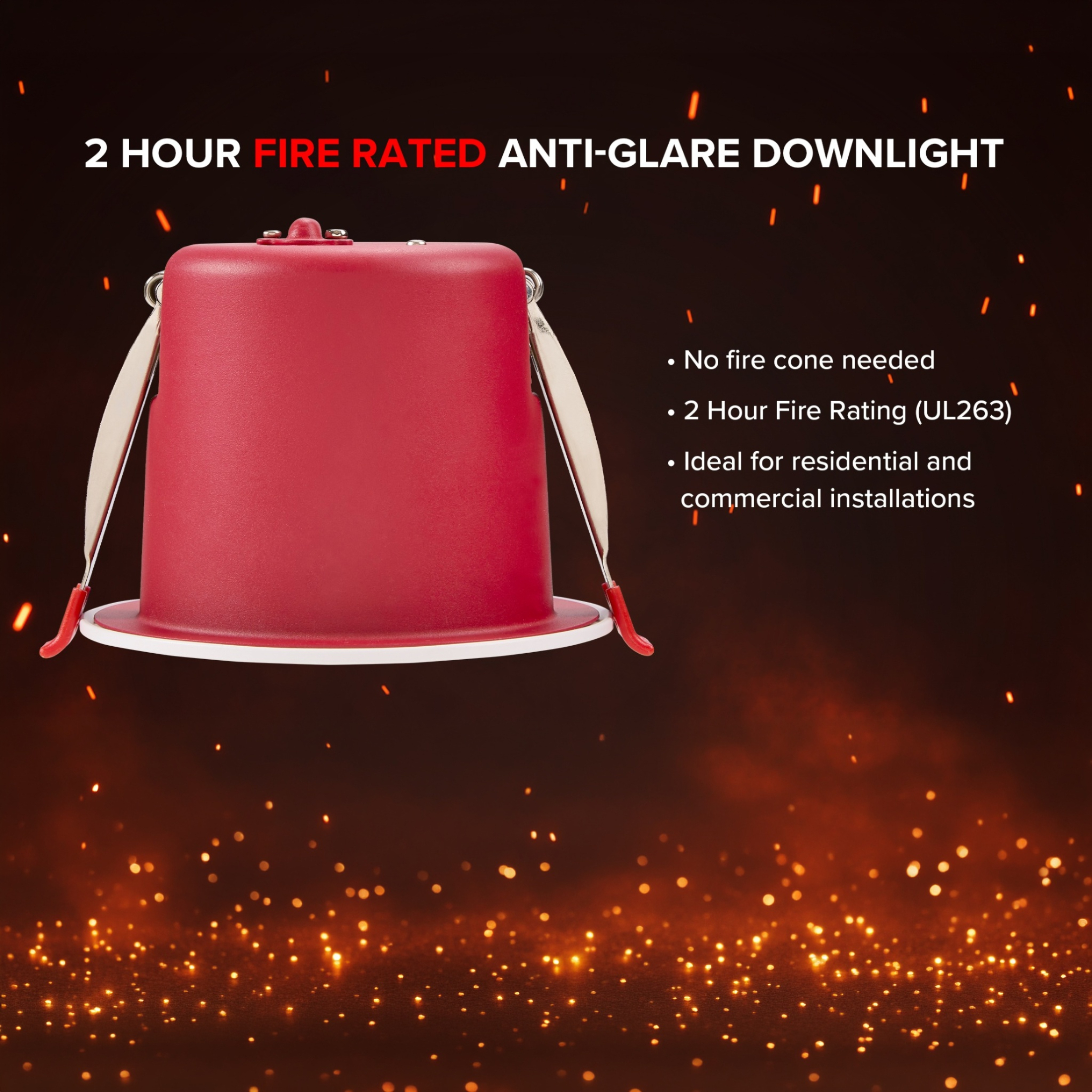 |
UL 263 and Fire-Rated LED Lighting CertificationsUL 263 is the Standard for Fire Tests of Building Construction and Materials. For recessed LED lighting, it is used to evaluate how a recessed light performs when installed in a fire-rated ceiling. Because cutting an opening for a recessed light can potentially compromise that assembly, fixtures intended for these applications must be evaluated to confirm they can be used without reducing the specified fire-resistance performance when installed as directed. Fire-resistance ratings are expressed in hours, such as a 2-hour fire rating, based on controlled fire testing of the complete assembly. This is particularly important in applications such as multifamily and commercial construction where fire-resistance-rated ceilings may be required by building codes or project specifications. Maxxima’s UL 263 fire-rated recessed lights feature a 2-hour fire rating and a reinforced, heat-resistant steel casing. The red backing provides an easy visual indicator of the fixture’s fire-rated construction, helping distinguish these models during installation. |
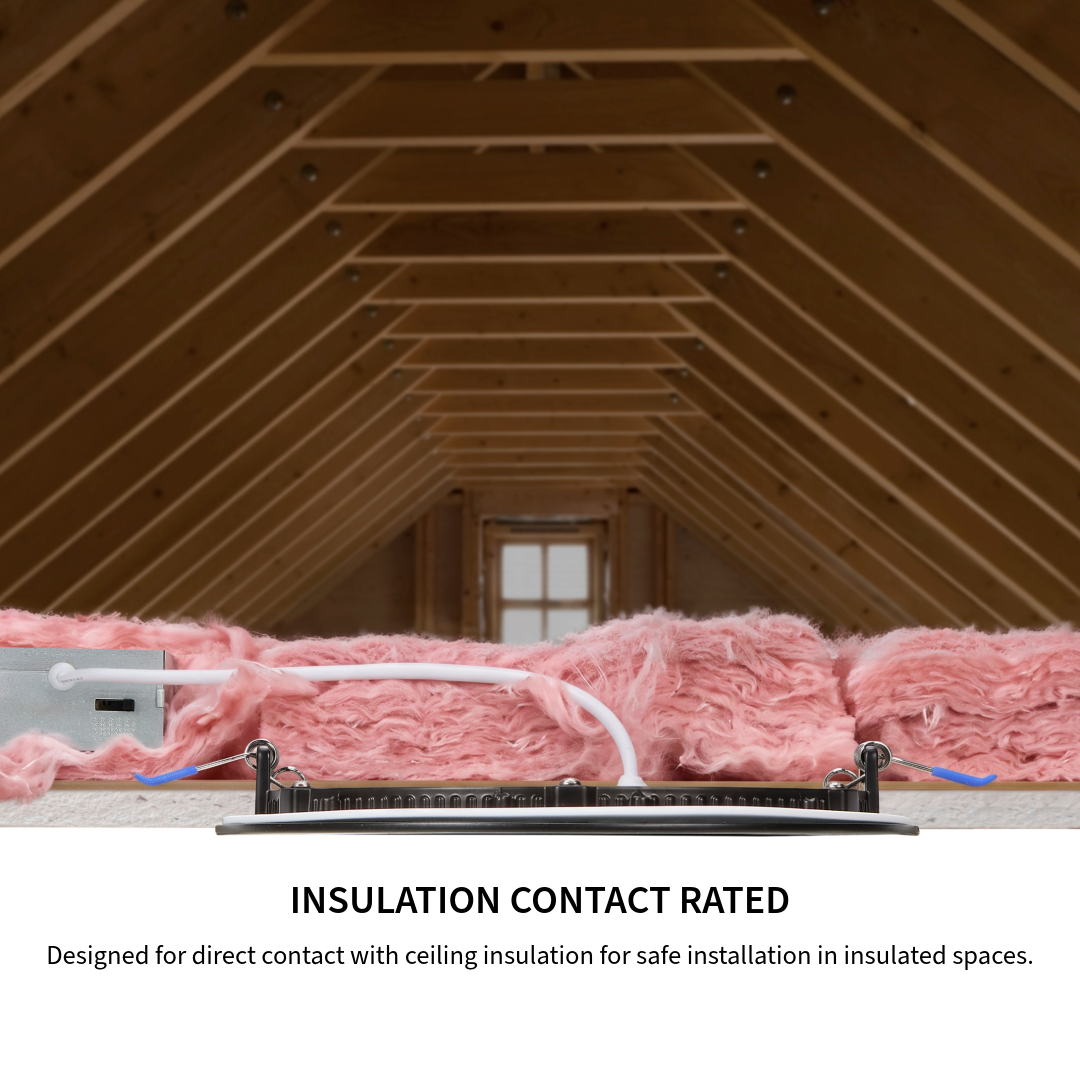 |
What Does IC Rated Mean in LED Lighting?IC stands for Insulation Contact. An IC-rated light fixture is designed and tested to safely operate while in direct contact with insulation. This is especially important for canless recessed LED downlights installed in insulated ceilings, where the fixture may sit directly against materials such as fiberglass or cellulose insulation. In practical terms, an IC rating helps tell you whether a fixture is appropriate for an insulated ceiling. Non-IC fixtures require clearance from insulation to prevent excessive heat buildup, while IC-rated fixtures are designed for direct contact. Always check the fixture labeling and installation instructions to confirm the requirements for your specific application. All Maxxima canless LED downlights are IC rated, so they are designed for use in insulated ceilings where the fixture may come into direct contact with insulation. Be sure to review the product specifications and installation instructions for your specific model before installation. |
California Lighting Requirements: Title 20 and Title 24
Title 20 is California’s Appliance Efficiency Regulation, which sets minimum efficiency requirements for certain products sold or offered for sale in the state. For lighting, this can apply to specific categories of LED fixtures and other regulated light sources. Products covered by Title 20 must meet the applicable efficiency requirements and, when required, be certified through the California Energy Commission before they can be sold in California.
Maxxima retrofit downlights and light bulbs can carry a Title 20 designation, this indicates that the product meets the applicable California efficiency requirements for its regulated product category. Always check the individual product specifications to confirm whether Title 20 applies to the specific fixture you are considering.
Title 24, Part 6 is California’s Building Energy Efficiency Standards, also known as the Energy Code. Unlike Title 20, which regulates certain products sold in California, Title 24 focuses on how lighting and other building systems are designed and installed in new construction, additions, and alterations.
For residential lighting, many installed light sources must meet the requirements of Joint Appendix JA8, which establishes performance and marking requirements for qualifying lighting products. The exact requirements depend on the type of building, application, and applicable Energy Code provisions.
ENERGY STAR and Verified Energy Performance
ENERGY STAR is a U.S. Environmental Protection Agency (EPA) program focused on verified energy efficiency and product performance. Products carrying the ENERGY STAR LED lighting certification label must be third-party certified by an EPA-recognized certification body using testing from an EPA-recognized laboratory. This means the mark is backed by independent testing rather than simply being an energy-efficiency claim made by the manufacturer.
For LED downlights, ENERGY STAR requirements evaluate more than just how much electricity a fixture uses. Current criteria address factors such as lumens per watt, minimum light output, light distribution, long-term performance, and warranty coverage, helping ensure an efficient fixture also delivers dependable lighting performance.
When you see the ENERGY STAR label on an LED lighting product, it means the product has met established standards for energy efficiency and performance. For Maxxima products that carry the ENERGY STAR label, this provides added confidence that the fixture is designed to deliver efficient, reliable lighting.
Choosing LED Lighting With Confidence
Understanding common LED lighting certifications and ratings can make it easier to choose a fixture that fits the safety, efficiency, and compliance requirements of your project. Whether you're comparing IC ratings, safety listings, fire ratings, or energy-efficiency certifications, always review the specifications for the individual product before installation. Explore Maxxima’s LED lighting solutions to find fixtures designed for a wide range of residential and commercial applications.