
Learn how gimbal LED downlights work, including tilt, rotation, types, and where to use them for accent, task, and flexible lighting.
Gimbal downlights are versatile lighting solutions designed to provide flexibility and control over light direction. Unlike traditional lighting fixtures, gimbal lights feature a rotatable mechanism within the housing that allows the light beam to tilt and rotate, making it easy to highlight specific areas or architectural details. Commonly used for accent and task lighting, gimbal LED downlights offer tilt options ranging from 15° to 45°, with floating gimbals allowing up to 90° of tilt, plus 360° rotation, giving homeowners and professionals greater freedom to direct light exactly where it’s needed. This adaptability makes gimbal downlights a popular choice across a wide range of residential and commercial applications.
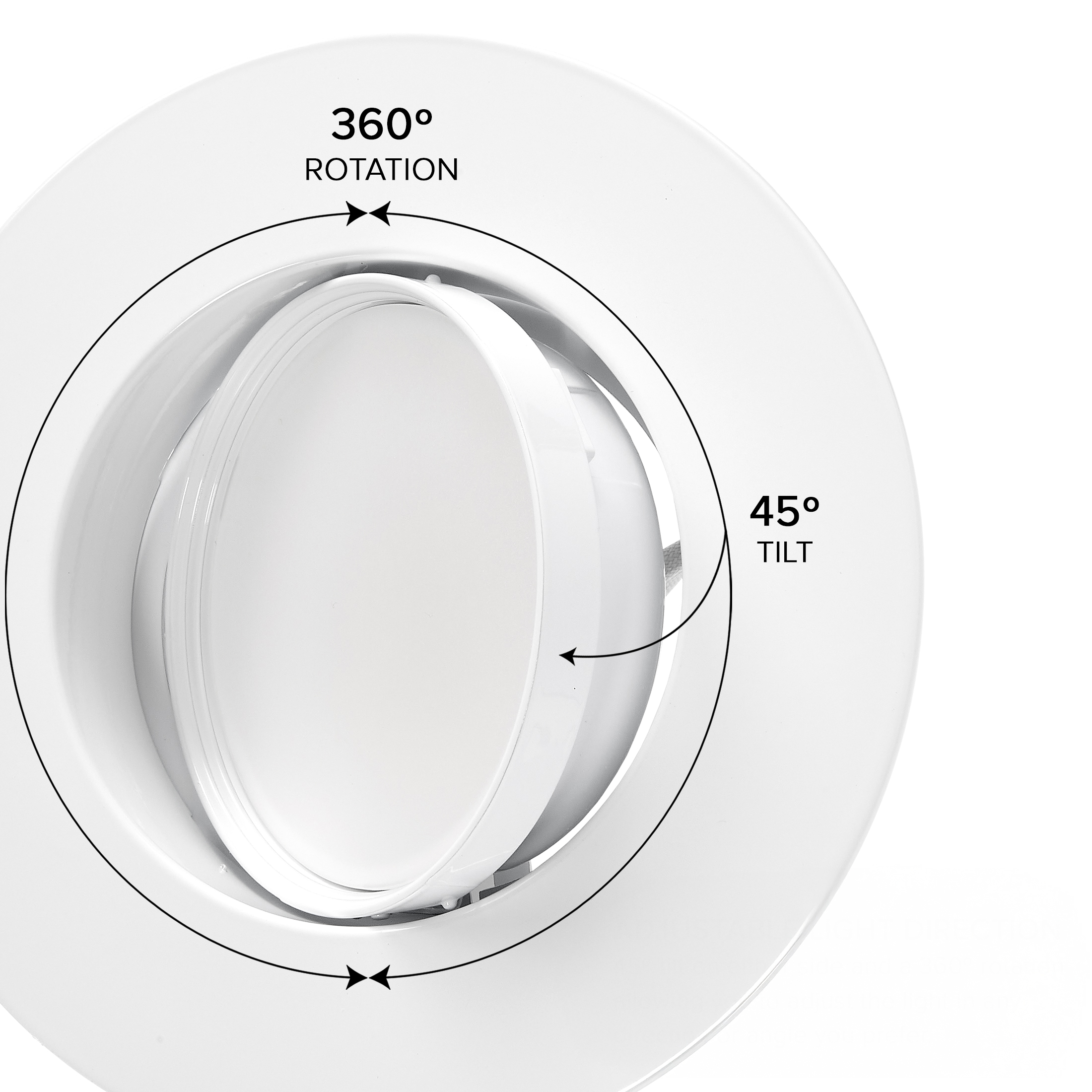 |
Understanding Tilt vs. Rotation in Gimbal LightingTilt and rotation serve different purposes for gimbal lights, and understanding the difference helps ensure you choose the right fixture for your space. Tilt refers to the vertical movement of the light, allowing the beam to angle upward or downward to highlight walls, artwork, or work surfaces. Rotation, on the other hand, allows the fixture to turn horizontally within the ceiling opening, changing the direction the light faces. While all eyeball gimbal lights offer tilt functionality, not all models include rotation capability. Fixtures without rotation are commonly referred to as fixed gimbals. Fixtures with both tilt and rotation provide greater versatility, especially in spaces where lighting needs may change or precise aiming is required. |
Fixed vs. Adjustable Gimbal Downlights
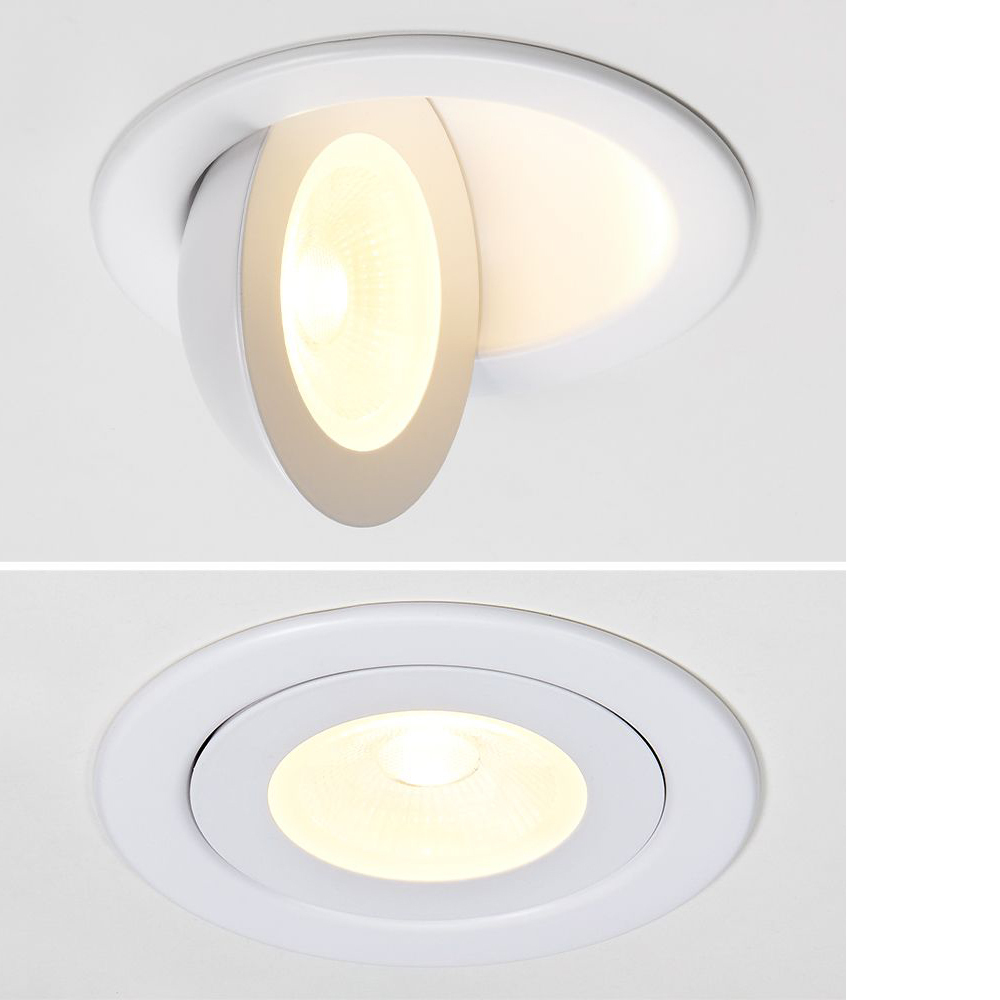
Gimbal lights are available in both fixed and adjustable configurations, each designed to serve different lighting needs. Fixed gimbals maintain a consistent light direction along a set angle, making them a practical option for spaces where uniform illumination is preferred. Adjustable gimbals allow the light to be repositioned in any direction through tilt and, in some models, rotation. This added flexibility makes adjustable LED downlights well suited for accent lighting, directional lighting, or areas where focus may change over time.
 |
Floating Gimbals vs. Traditional GimbalsFloating gimbals offer an expanded range of adjustability compared to traditional gimbal lights, making them a strong choice for applications that require more dramatic light positioning. While standard gimbals typically allow controlled tilt and limited rotation, floating gimbals can tilt up to 90°, allowing the light to be aimed directly at vertical surfaces such as walls, columns, or architectural features. This added versatility makes floating gimbals especially effective for wall washing, accent lighting, and spaces with sloped ceilings, where traditional recessed downlights may not provide sufficient coverage. |
Where Gimbal Downlights Work Best
Gimbal LED downlights are commonly used in both residential and commercial spaces where directional lighting is needed. In living rooms, they can be angled to highlight artwork, architectural details, or feature walls while still supporting general illumination.. Kitchens benefit from gimbal lights as focused directional lighting, allowing light to be directed toward countertops, islands, and work areas for improved visibility, with multi-head gimbal configurations working especially well in kitchen layouts. In retail environments, gimbal downlights are often used to spotlight products and displays, helping draw attention and create visual interest. Office spaces also benefit from eyeball gimbal lighting by providing adjustable, focused illumination for workstations and meeting areas. Beyond functionality, gimbal lights are effective for creating mood and accent lighting, adding depth and dimension by directing light toward specific focal points throughout a space.
Choosing the Right Gimbal Downlight for Your Space
Gimbal lights offer a versatile lighting solution that combines directional control and modern design. Whether used for accent lighting, task lighting, or general illumination, their ability to tilt and, in some models, rotate allows light to be directed exactly where it’s needed. With multiple eyeball gimbal styles available, homeowners and professionals alike can choose the option that best fits their space, lighting goals, and installation requirements.
Explore Maxxima’s range of gimbal LED downlights to find a solution that enhances both the functionality and visual appeal of your lighting design.