
Have you ever wondered how the many different shapes and sizes of light bulbs are classified? Each style of light bulb has a common name as well as a technical name. Understanding the common household light bulb sizes, shapes and styles is important so you can ensure your home is properly lit, energy efficient and decorated to your standards. Every bulb has identifying features that are portrayed within the name of the bulb. All light bulbs are named by a series of numbers and letters to indicate shape, size and features. This article has all you need to know about light bulb nomenclature.
Bulb Sizing:
The number assigned to each bulb type indicates the diameter of the bulb. To determine the diameter, divide the assigned number by 8. For example, an A19 bulb has a diameter of 2-3/8" (19 divided by 8).
Here’s a breakdown of the bulb types that MaxximaStyle offers:
A19 Light Bulbs:
These standard A19 light bulbs are the most widely used and thought of when it comes to home lighting. They are a common light bulb that is shaped like an upside down pear. These bulbs are your typical lighting option when it comes to lamps, shaded ceiling fixtures, vanity lights, porch lights and so on. The A for A19 stands for arbitrary/standard to indicate that this is your everyday, run of the mill bulb. The number indicates the bulb’s diameter in eighths of an inch.
BR Bulbs:
BR Bulbs have wide flood beam angles, which means they provide more than a 45° angle when lighting an area BR stands for bulged reflector because, traditionally, the inside surface of an incandescent BR bulb is covered in a reflector material that allows the light to cast a wide beam of light. LED BR bulbs do not require this reflector material. When a broad area needs to be illuminated, BR bulbs are often used. These long neck light bulbs are typically found in recessed lighting applications with can lights, commonly found in kitchens, living rooms, dens, hallways and many other locations. These bulbs are considered flood lights.
ST Bulbs:
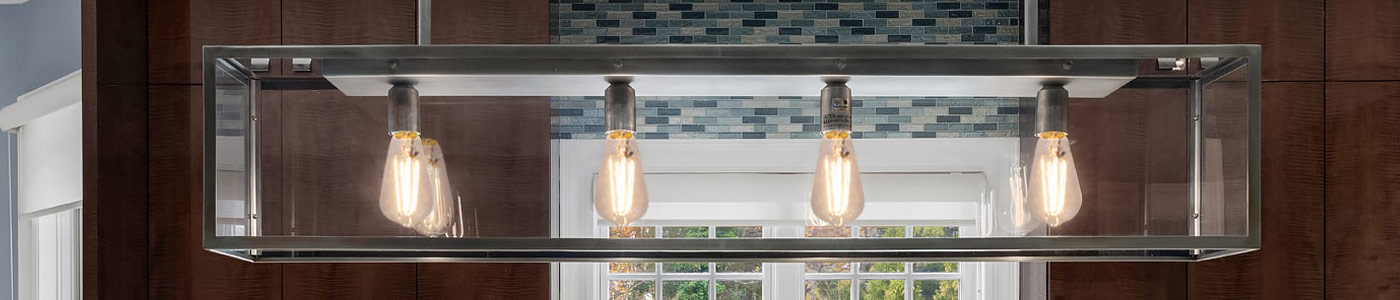
The ST bulbs, also known as Edison bulbs, have a vintage look to them with an elongated body that is slightly wider at the top. ST stands for straight tubular, which means the bulbs are elongated tubed bulbs shaped with a straightedge and a tubular end. This style bulb is commonly used in various wall mounted fixtures, outdoor lights, trendy fixtures, decorative fixtures in restaurants and more.
Globe Light Bulbs:
Globe (G) bulbs are exactly as they are named, globe-shaped round light bulbs. They are commonly used in homes, salons and studios. They are both decorative and functional and can be used for many applications, including, bathroom and makeup vanities, ornamental fixtures and more. The bulbs themselves have a unique and decorative look and are often highlighted within the fixtures. They may also be exposed with no enclosure, such as in the classic makeup vanity style.
PAR Bulbs:
These PAR light bulbs are used in a wide variety of applications due to their focused light and more narrow beam angle compared to BR bulbs. PAR light bulbs are shaped similarly to BR bulbs but have a flat lens. They are generally rated for both indoor and outdoor use and are commonly used for security lighting, theatres restaurants, and spot-lighting. PAR stands for parabolic aluminized reflector. In incandescent PAR bulbs there is a U-shaped reflector used to maximize brightness and direct light through the front of the bulb in a narrow beam or wide beam pattern. Typically, LED PAR bulbs will not have a reflector but will still deliver the same hard-edged lighting. PAR bulbs install flush with ceilings or fixtures, reducing glare